
The return to school brings plenty to organize: backpacks, transportation, lunch supplies, and the adjustment to earlier mornings. Health appointments can easily slip down the list, especially when a child seems comfortable and well.
A back-to-school health review does not have to mean booking every possible examination at once. It is a chance to check which appointments are due, rebuild everyday routines, and notice concerns that deserve attention.
Dental care is a useful starting point. Comfortable teeth make eating, sleeping, and concentrating easier. Hearing and vision deserve attention, too, because changes can affect how children participate in the classroom.
Here is a manageable way to review your child’s preventive care without turning the start of school into another source of pressure.
Check When the Next Dental Visit Is Actually Due
The school calendar is a helpful reminder to look at your child’s dental records. It is not, by itself, a reason for an extra examination.
Children need regular dental examinations, but the timing should follow an individualized recall schedule. A dentist considers factors such as previous cavities, tooth development, gum health, home-care habits, and other health needs when recommending the next visit.
If your child had an examination recently and has no new concerns, staying with the existing schedule may be appropriate. If you cannot remember when the next appointment is due, a quick call to the dental office can clear that up.
Start dental care early
The BC Dental Association recommends a first dental visit by age one or within six months after the first tooth appears. Baby teeth need care even though they will eventually fall out. They help children chew, develop speech, and maintain space for permanent teeth.
An early visit also gives caregivers a chance to ask practical questions about brushing, fluoride, feeding habits, and teething. You do not need to wait until a child can sit through an adult-style appointment.
Preventive dentistry is most useful when it responds to the child in front of the clinician. Depending on a child’s needs, a dental team may discuss fluoride treatments or sealants for susceptible chewing surfaces. These decisions belong in an individual care plan, rather than a universal back-to-school checklist.
Do not wait for a routine visit when something changes
Tooth pain, a chipped tooth, swelling, or a new change in the mouth deserves attention sooner. A child who starts avoiding crunchy foods or chewing on one side may be uncomfortable even if they do not describe a toothache.
Contact a dental professional promptly after a dental injury or for persistent pain. Facial swelling with fever, difficulty swallowing, or trouble breathing requires urgent medical attention. A knocked-out permanent tooth is also a time-sensitive dental emergency.
Rebuild Brushing Routines Around the School Day
Summer can loosen even well-established routines. Later bedtimes, travel, and evenings away from home make missed brushing understandable. The goal is to restart, not assign blame.
Choose two dependable moments: morning and bedtime. Brushing twice daily with fluoride toothpaste is a core part of children’s dentistry and home prevention. Bedtime brushing is especially useful because saliva flow decreases during sleep.
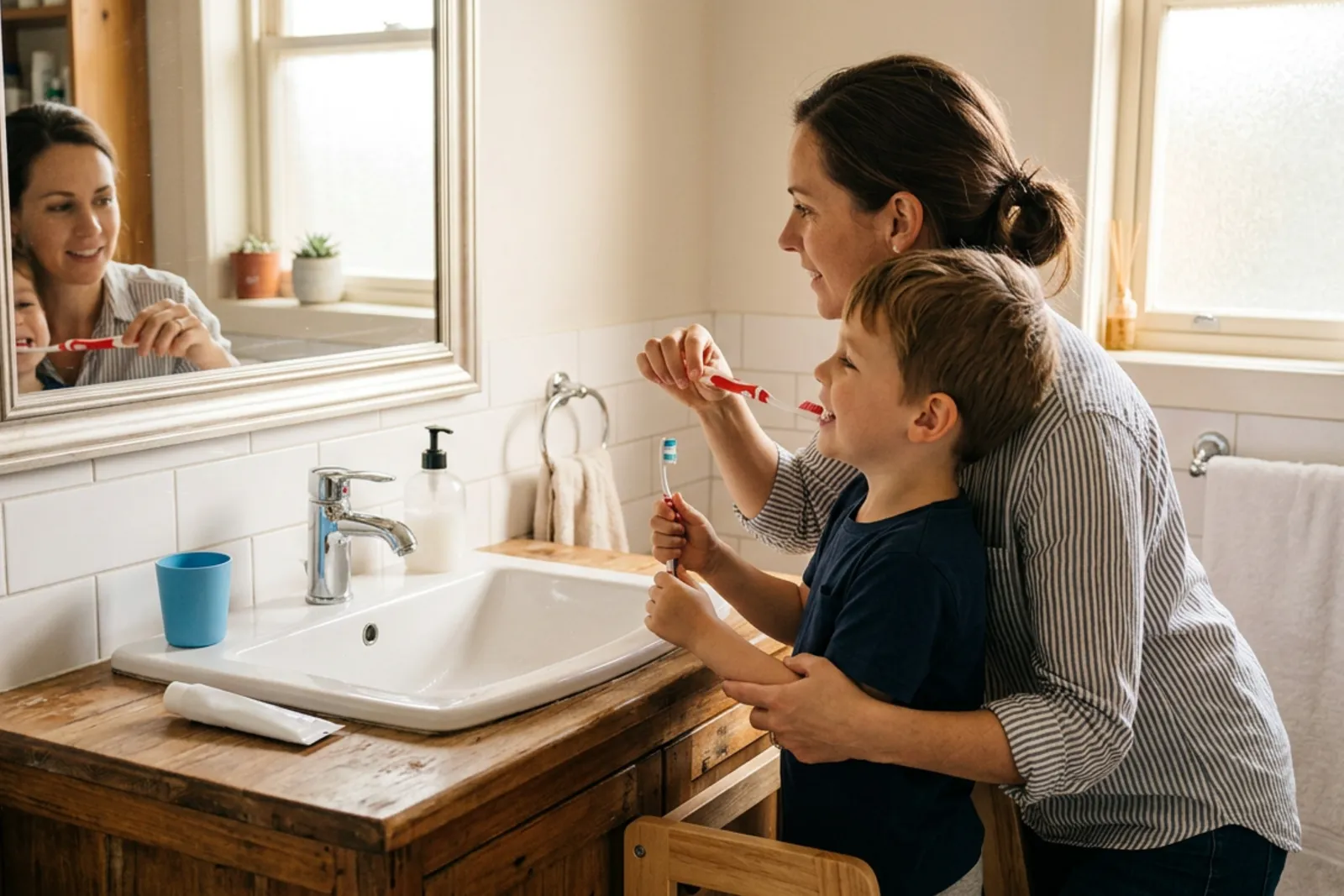
Keep toothbrushes and toothpaste easy to reach, while storing toothpaste safely away from very young children. A stable step stool can help a child reach the sink comfortably.
Give younger children hands-on help
Young children usually need more than a reminder. They may enjoy holding a toothbrush without having the coordination to clean every surface thoroughly.
Let them take a turn, then help finish. Many children need brushing assistance until around age seven or eight, and some need it longer. Ability matters more than a birthday.
Use an age-appropriate amount of fluoride toothpaste. For children under three, a rice-grain-sized smear is generally recommended. For children ages three to six, use a pea-sized amount and supervise to reduce swallowing. Your dental team can tailor advice to your child’s needs and local guidance.
Help children clean between teeth once adjacent teeth touch. A dentist or dental hygienist can show you how to do this safely.
Make the routine easier to repeat
A two-minute timer or a familiar song can help. So can connecting brushing to something that already happens every day, such as getting dressed or putting on pajamas.
For children who find brushing uncomfortable, ask what is bothering them. A strong toothpaste flavor, a large brush head, or sensory sensitivity may be part of the problem. A smaller brush or a different toothpaste can sometimes make the routine more manageable.
Consistency matters more than a perfect performance every night.
Pack School Snacks That Work for Teeth and Real Life
A tooth-friendly lunch does not need to be elaborate. It needs to be practical enough that your child will eat it and you can keep preparing it.
Water is a sensible everyday drink. Nutritious snack choices might include cheese, plain yogurt, vegetables, whole fruit, or other foods that fit your child’s dietary needs and school rules.
The pattern of eating matters alongside the food itself. When oral bacteria use sugars, they produce acids that can damage tooth enamel. Frequent sipping on sugary drinks or grazing on sweet snacks creates repeated acid exposure.
That is why a sweet food eaten with a meal is generally less concerning than the same food nibbled over several hours.
Consider a child who carries juice and takes small sips throughout the morning. Replacing that drink with water reduces repeated sugar exposure without requiring a complete lunchbox overhaul. If juice is included, having it with a meal rather than sipping it for hours is a more tooth-conscious approach.
Sticky sweets and chewy fruit snacks can cling to teeth. Dried fruit can also be sticky, so it is worth considering when and how often it is eaten. Whole fruit is usually a more practical everyday choice.
Avoid turning food into a source of shame. Children have different appetites, sensory needs, allergies, and access to food. A workable improvement is more useful than a lunch plan nobody can sustain.
Review Hearing Without Assuming Every Child Needs a New Test
Many babies born in British Columbia hospitals receive newborn hearing screening through the BC Early Hearing Program. That early screening is valuable, but it does not rule out hearing changes later in childhood.
School-age children may not recognize or explain that they are having trouble hearing. You might notice that your child frequently asks for repetition, turns up the television, or struggles to follow conversation in a noisy room. A teacher may report that spoken instructions are being missed.
These signs do not establish a diagnosis. They are reasons to discuss hearing with a primary care provider, who can arrange an assessment or referral when needed.
Protect hearing during everyday activities, too. Limit prolonged exposure to loud noise, use suitable hearing protection in noisy settings, and keep headphone volume moderate. Listening breaks are helpful, but they do not make very loud sound safe.
Ear pain, discharge, redness around the ear, injury, or an object lodged in the ear warrants medical assessment. Do not try to remove a deeply lodged object yourself. A suspected button battery in the ear requires immediate emergency assessment.
Put Vision Care on the Calendar
A child can have a vision problem without complaining about blurry sight. They may assume everyone sees the same way.
Possible clues include squinting, closing one eye, holding reading material unusually close, headaches during close work, or avoiding activities that require sustained visual attention. These behaviors can have several causes, so an examination is more helpful than guesswork.
BC Doctors of Optometry recommends a first eye examination between six and 12 months of age, followed by one comprehensive examination each year. An optometrist may recommend a different schedule for an individual child.
A school vision screening, when available, is not the same as a comprehensive eye examination. Screening can identify some concerns, but it does not assess every aspect of eye health and vision.
Eye infections, persistent tearing that may suggest a blocked tear duct, or concerns about how a child sees should be assessed by an optometrist or primary care provider. Sudden vision loss, severe eye pain, or a serious eye injury requires urgent care.
Build eye protection into ordinary routines
A wide-brimmed hat and sunglasses that provide full UVA and UVB protection help protect children’s eyes outdoors. Encourage regular outdoor time, which supports general health and may help reduce the risk of developing nearsightedness.
Keep household chemicals out of reach, and discourage play with sharp objects near faces. Use appropriate protective eyewear for activities with a risk of eye injury.
For screens, encourage regular breaks and comfortable viewing distances. About an arm’s length is a useful starting point for smaller screens. For a large television, a distance of roughly three meters, or about 10 feet, may be appropriate, depending on screen size and the room setup.
Avoid treating distance as a guarantee against eye strain. Lighting, text size, posture, and the length of uninterrupted viewing also matter. If a child repeatedly needs to move very close to see clearly, arrange an eye examination.
Ask About Financial Help Before Delaying Care
Cost can make preventive appointments difficult. Families should not have to guess whether assistance exists or feel embarrassed about asking.
For children’s dental care, eligibility for public support depends on the program. Household income, access to private dental insurance, residency, and other requirements may affect coverage.
British Columbia’s Healthy Kids program may help eligible families with basic dental care and prescription eyewear for children. The federal Canadian Dental Care Plan may also help eligible residents who meet its requirements. Enrollment, covered services, and possible out-of-pocket costs should be confirmed before treatment.
A local public health unit may be able to explain community dental resources or point families toward relevant services. Ask the dental office for a treatment estimate and whether it can help clarify available coverage. Public assistance does not necessarily pay the full cost of every procedure.
Vision care has its own funding arrangements. British Columbia’s Medical Services Plan provides a contribution toward eligible eye examinations for children under 19, but clinics may charge additional fees. Ask about those charges when booking.
Depending on eligibility, help with children’s glasses may be available through provincial optical coverage, the Healthy Kids program, First Nations Health vision benefits, the At Home program for children with complex health needs, or the We See BC Foundation. Each has its own requirements, so confirm details directly with the program or provider.
Make a Small Plan You Can Actually Use
You do not need to organize every health task in one afternoon. Start by separating routine reminders from concerns that need prompt attention.
A short plan might look like this:
Check the dates and recommendations from the last dental and eye examinations.
Write down new symptoms or questions, including observations from your child’s teacher.
Book appointments that are due and ask about fees or coverage.
Restart morning and bedtime brushing, then make one manageable lunchbox change.
Bring relevant health information to appointments, including medications, allergies, and any accommodations that help your child feel comfortable. If appointments cause anxiety, tell the care team beforehand. Knowing what to expect, having extra explanation, or agreeing on a pause signal can make visits easier.
Back-to-school preparation is already demanding. A useful health review should reduce uncertainty, not add guilt. Keep the routines that work, ask for help with the parts that do not, and respond to new symptoms rather than waiting for the calendar to catch up.