
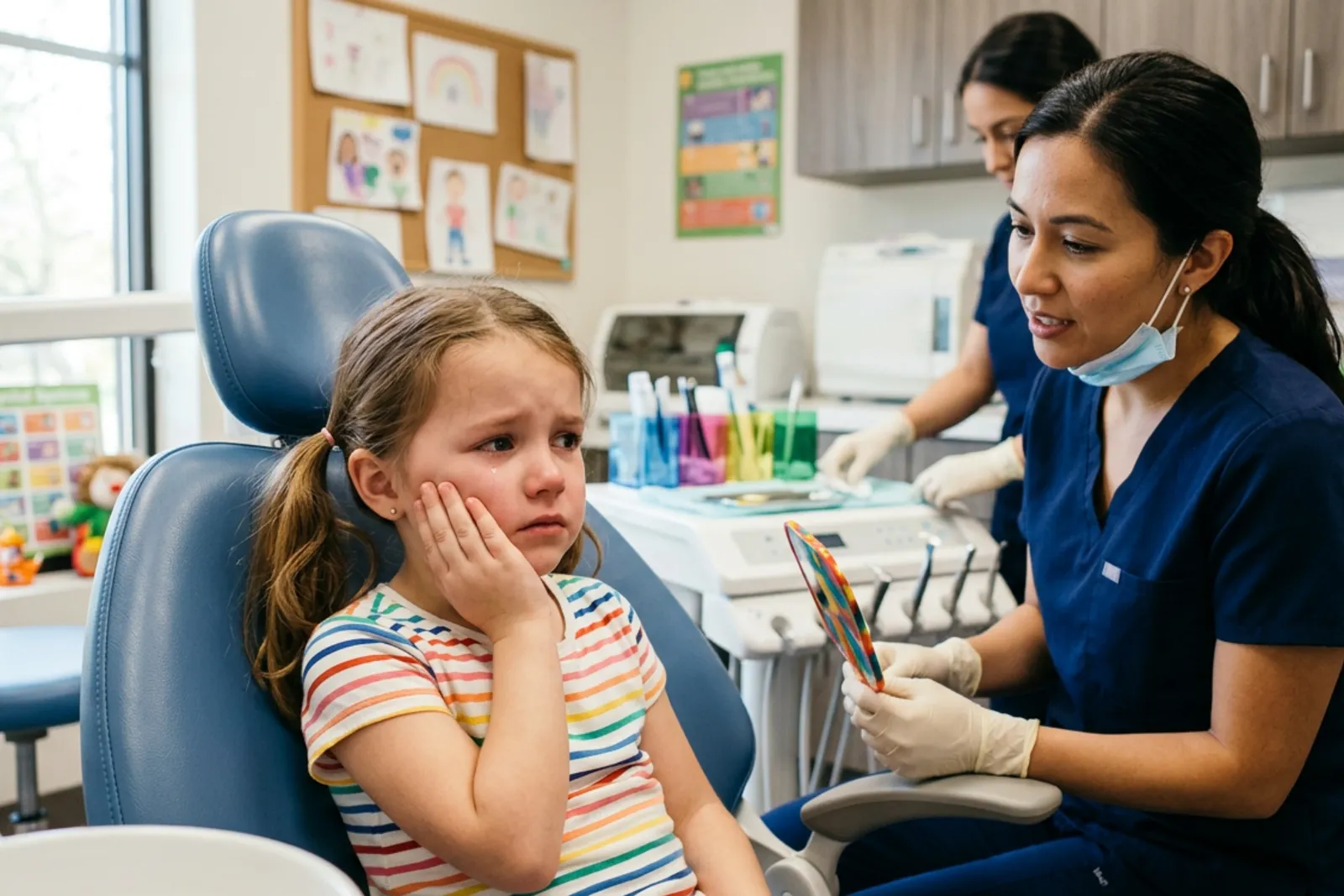
A child’s toothache can interrupt dinner, wake the household at night, or turn an ordinary school day into a worried phone call. A dental injury can happen even faster. One fall on the playground, and suddenly you are trying to work out whether a chipped or loose tooth needs immediate care.
You do not need to diagnose the problem yourself. Your job is to notice what has changed, help your child stay comfortable, and seek the right level of care.
Some problems need a prompt dental appointment. Others, such as a knocked-out permanent tooth, need immediate dental attention. Breathing difficulty, rapidly spreading facial swelling, or serious trauma requires emergency medical care.
This guide explains those differences and what families can safely do while arranging help.
Is It a Dental Emergency or a Medical Emergency?
Dental emergencies include sudden tooth pain, damage, swelling, bleeding, or injury that needs professional assessment. The urgency depends on the symptoms, the injury, and whether a baby tooth or permanent tooth is involved.
Contact a dentist promptly if your child has persistent pain, a broken tooth, swelling, or a tooth that became loose after an accident. If you are unsure how serious the problem is, calling for guidance is reasonable. A child who looks comfortable may still have an injury that needs treatment.
Some symptoms go beyond what should wait for a dental appointment. Seek emergency medical care for:
Difficulty breathing or swallowing, or swelling that is spreading rapidly across the face or neck.
Bleeding that is heavy or does not stop with sustained pressure.
Major facial or jaw trauma, especially with a possible head injury.
Unusual drowsiness, confusion, difficulty staying alert, or a child who appears seriously unwell.
Severe difficulty opening the mouth, particularly with swelling, fever, or swallowing problems.
Call 9-1-1 when symptoms are life-threatening or safe transportation is uncertain. Do not wait for a dental office to return a call when your child is having trouble breathing.
Toothaches and Sensitivity: When Pain Needs Attention
A sore tooth can have several causes, including decay, exposed tooth structure, inflammation inside the tooth, or an injury. Food trapped between teeth can also cause discomfort. The symptoms alone do not always reveal the cause.
Brief sensitivity to cold is different from throbbing pain that keeps a child awake. Still, recurring sensitivity deserves assessment, particularly if it affects one tooth or follows an accident.
Arrange prompt dental care when pain persists, returns repeatedly, worsens, or interferes with eating or sleeping. Pain when biting also needs attention. It may indicate damage that is difficult to see at home.
While waiting for advice, offer soft foods and avoid temperatures that trigger discomfort. Gentle brushing can help keep the area clean. If food appears trapped between teeth, careful flossing may help, but do not poke the gum with sharp objects.
For pain medicine, ask a dentist, pharmacist, or other healthcare professional about an age-appropriate option and follow weight-based dosing instructions. Children should not receive aspirin unless specifically prescribed. Never place aspirin or another medication directly against a tooth or gum, because it can damage the tissue.
Avoid mouth-numbing gels or sprays unless a professional recommends them for your child. Some products are unsafe for young children or can cause harm if swallowed.
Temporary relief does not mean the underlying problem has resolved.
Chipped, Broken, and Loose Teeth After an Accident
A small chip may look minor, especially if your child says it does not hurt. That is reassuring, but it does not rule out deeper damage. A tooth can also be injured below the gumline.
Call a dentist after a tooth breaks or becomes loose because of trauma. Describe whether the tooth has moved, whether the child can bite normally, and whether you can see a pink or red area inside the broken surface.
If you find a tooth fragment, keep it in a clean container and bring it to the appointment. A dentist may sometimes be able to use the fragment during repair. Do not try to glue it back yourself.
A cold compress against the outside of the cheek can help with swelling and discomfort. Wrap the cold pack in cloth rather than placing ice directly on the skin. Encourage your child to avoid biting on the injured tooth.
Normal looseness versus injury-related looseness
A baby tooth becoming loose as part of normal tooth development is usually expected. A tooth that suddenly loosens after a collision or fall is different.
Even if the affected tooth is a baby tooth, the dentist may need to check the gums, supporting bone, and developing permanent tooth beneath it. A tooth pushed inward, sideways, or out of its usual position needs prompt assessment.
Do not repeatedly wiggle an injured tooth to test it. That can add discomfort and disturb the tissues.
A Knocked-Out Tooth Needs a Different Response
Whether the tooth is primary or permanent changes what you should do next.
A knocked-out baby tooth should not be replanted. Putting it back can harm the developing permanent tooth. Contact a dentist promptly so the injury can be assessed.
A knocked-out permanent tooth is time-sensitive. The best chance of preserving it generally comes with rapid action, ideally within the first 30 minutes. Do not assume it is too late if more time has passed. Seek immediate dental help anyway.
If a permanent tooth has been knocked out:
Pick it up by the crown, the part normally visible in the mouth. Avoid touching the root.
If it is dirty, rinse it briefly and gently with milk or saline. Do not scrub it, use soap, or remove attached tissue.
Call a dentist immediately. If you are certain it is a permanent tooth and the child is alert and cooperative, immediate replantation may be appropriate. Follow professional guidance whenever possible and never force the tooth into place.
If the tooth cannot be safely replaced, keep it moist in milk or a tooth-preservation solution. Do not leave it dry or store it in plain water.
Bring the child and tooth for emergency dental care without delay.
Do not place a loose tooth inside a young child’s mouth for storage because it could be swallowed or inhaled. If you cannot tell whether it is a baby or permanent tooth, keep it moist and get immediate advice rather than guessing.
Swelling, Fever, and Infection Warning Signs
Swelling around a tooth, gum, cheek, or jaw can result from infection or injury. It deserves prompt attention even when pain is mild.
A gum bump that drains or leaves a foul taste may be related to a dental infection. Drainage can reduce pressure and make the child feel better temporarily, but it does not remove the source of infection.
Fever together with tooth pain or swelling increases the urgency. So does swelling that is getting larger, difficulty opening the mouth, or a child who is unusually tired and unwell.
Contact a dentist for urgent assessment. If swelling spreads toward the eye or neck, or your child has trouble breathing or swallowing, seek emergency medical care.
Do not squeeze a swollen area or try to drain it. Do not give leftover antibiotics. Dental infections often require treatment of the affected tooth, and antibiotics alone may not solve the problem. A clinician will decide whether antibiotics are needed.
Bleeding, Lip Injuries, and Falls
Mouth injuries can bleed a surprising amount. A small lip cut may look alarming because blood mixes with saliva.
If it is safe to do so, apply steady pressure with clean gauze or a clean cloth. Try not to lift it repeatedly to check, because that can disturb the clot. Seek urgent care if bleeding remains heavy or does not stop after about 10 to 15 minutes of continuous pressure.
Deep cuts, separated wound edges, or injuries that go through the lip may need medical assessment. A dentist can check for tooth and gum damage, while medical care may be needed for the soft-tissue wound.
If a tooth fragment is missing and the lip is cut, tell the treating clinician. A fragment can sometimes become embedded in the tissue.
After a fall, look beyond the mouth. Loss of consciousness, repeated vomiting, confusion, severe headache, or neck pain requires medical assessment. When a head or neck injury is possible, that takes priority over dental repair.
What Happens at an Emergency Dental Visit?
The visit usually begins with a conversation about what happened and when. The dentist will ask about pain, bleeding, swelling, fever, medications, and relevant medical conditions.
Helpful details include whether the injury occurred during a fall or collision, whether any tooth pieces are missing, and whether your child’s bite feels different.
The dentist then examines the mouth. Dental X-rays may be needed to check roots, supporting bone, hidden decay, or the relationship between an injured baby tooth and a developing permanent tooth.
Treatment depends on the findings. A small chip may need smoothing or tooth-colored bonding. A deeper fracture may need a more involved restoration or treatment of the tissue inside the tooth. Some injured permanent teeth can be repositioned and stabilized with a splint.
When infection involves the inside of a tooth, treatment may include pulp treatment, root canal therapy, or extraction, depending on the tooth and the child’s circumstances.
Emergency dental care often addresses the immediate problem first. Follow-up appointments may be needed to complete treatment or monitor healing. An injured tooth can develop complications later, even after it initially feels better.
Helping Your Child Feel Safe
A frightened child needs a calm adult more than a perfect explanation. Use simple language: “The dentist will check your tooth and help it feel better.”
Avoid promising that nothing will hurt. Instead, explain that the dental team can help manage discomfort and will tell them what is happening.
There is no benefit in blaming a child for an accident or a cavity. During an emergency, focus on comfort and getting help.
Tell the dental team if your child has sensory sensitivities, communication needs, or previous difficult healthcare experiences. Clear explanations and short pauses can make care easier. Pain-control options, and sometimes sedation, may be discussed when appropriate for the child and the treatment.
Where New Westminster Families Can Turn
For tooth pain, broken teeth, injury-related looseness, or localized swelling, call your regular dentist in New Westminster or an emergency dental provider. Describe the symptoms clearly so the team can advise you on timing.
In British Columbia, 8-1-1 provides non-emergency health guidance. It can help when you are uncertain about a health concern, but it should not delay immediate dental care for a knocked-out permanent tooth or emergency medical care for serious symptoms.
Royal Columbian Hospital has a 24-hour emergency department for serious medical emergencies, including major trauma, uncontrolled bleeding, and dangerous swelling. Hospital care can address urgent medical risks, although follow-up dental treatment may still be necessary.
Once the immediate problem is managed, preventive dentistry can help reduce future risks. Regular checkups allow cavities to be treated earlier, and a properly fitted sports mouthguard can reduce dental injuries during activities with contact or fall risks.
You do not have to judge every symptom perfectly. Notice pain, swelling, bleeding, or a change in a tooth’s position, then ask for help. Prompt guidance and a calm response can make a frightening moment more manageable for both you and your child.