
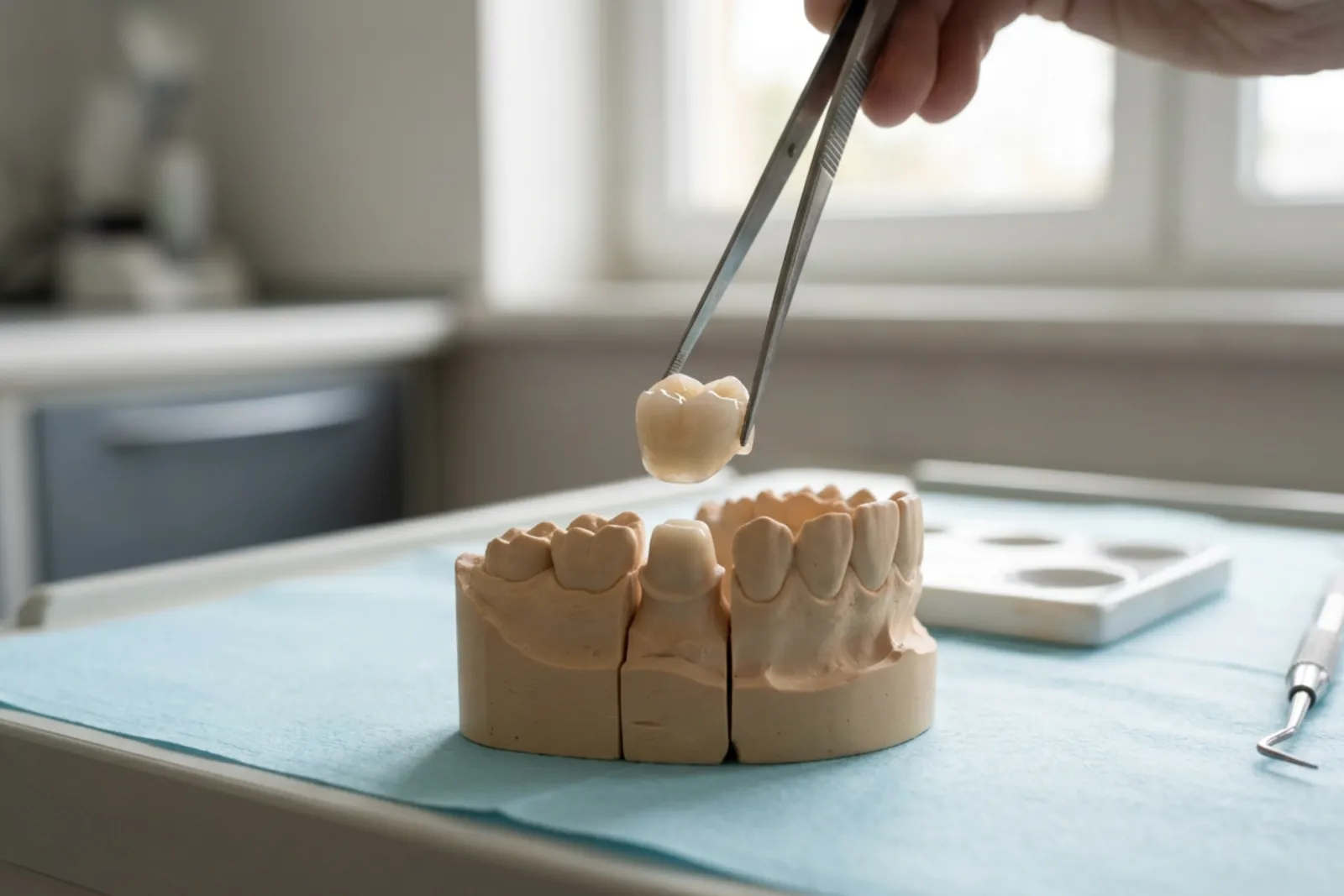
Being told you need a dental crown can bring up several questions at once. How much tooth will be removed? Will the procedure hurt? Why does one estimate look different from another?
A crown is a custom-made covering that fits over a prepared tooth. It can help protect a weakened tooth, restore its shape, and make chewing more comfortable. But the crown is only one part of the treatment. The condition of the tooth underneath, the material selected, and any additional restorative work all affect the plan and its cost.
Understanding those pieces makes it easier to ask useful questions and compare estimates fairly. Here is what typically happens during crown treatment, how the main options differ, and what to check before you proceed.
Why a Tooth May Need a Crown
A tooth with a small cavity can often be repaired with a filling. When a large amount of natural tooth structure is missing or weakened, however, another filling may not provide enough support.
This can happen after years of repeated repairs. Each replacement filling may leave less healthy tooth behind, particularly if new decay or a fracture has developed. A crown covers the remaining tooth and can help protect vulnerable areas against chewing forces.
Crowns are also used for some cracked or severely worn teeth. After root canal therapy, a tooth may need a crown, especially a back tooth that carries substantial chewing pressure. Not every root canal-treated tooth requires the same restoration; the amount and location of remaining tooth structure matter.
A crown can also correct an irregular shape or restore appearance. Proper shape and contact with neighboring teeth may reduce food trapping, although persistent gum problems need their own assessment.
The first question should be whether a crown is appropriate. Sometimes a filling, an onlay that covers part of the tooth, or another approach is reasonable. A tooth with a deep fracture, extensive decay, or inadequate support may need different treatment.
Before Treatment: Assessing the Tooth
Crown planning usually begins with an examination and, when needed, dental X-rays. Your dentist checks the existing restoration, remaining tooth structure, gums, bite, and signs of infection or cracking.
Mention any pain when biting, sensitivity that lingers after hot or cold foods, or a history of grinding your teeth. These details can affect both treatment and material selection.
It is also worth asking how predictable the proposed repair is. Crowns can protect teeth, but they cannot make every damaged tooth repairable. Occasionally, the full extent of decay or a crack becomes clearer only after an old filling is removed.
If you feel anxious about treatment, say so early. Your dentist can explain the numbing process, arrange breaks, and discuss appropriate comfort options before work begins.
The First Appointment: Preparation and a Temporary Crown
For a laboratory-made crown, treatment commonly takes two main appointments. The first prepares the tooth and provides a temporary covering while the permanent crown is made.
Numbing and rebuilding the tooth
Local anesthetic is generally used to numb the area. You may notice pressure or vibration during preparation, but sharp pain is a reason to signal your dentist so they can pause and reassess the anesthesia.
Old filling material, decay, and unsupported tooth structure may need to be removed. If too little structure remains to support the crown properly, the dentist may place a buildup. This restores the foundation over which the crown will fit.
A buildup is distinct from the crown itself. It may involve a separate fee and may have different insurance coverage. Root canal treatment, if needed, is also separate rather than an automatic part of getting a crown.
Making space for the crown
The dentist reshapes the tooth so the crown can fit over it without becoming too bulky. The amount removed depends on the crown material, tooth position, bite, and existing damage.
Some preparations require around 1.5 millimeters of clearance in certain areas, but this is not a universal measurement. Different surfaces and materials require different amounts of space. The goal is to preserve sound tooth structure while creating adequate room for the restoration.
A detailed impression or digital scan records the prepared tooth. Records of the opposing teeth and bite help the laboratory design a crown with suitable contacts, contours, and chewing surfaces.
Placing the temporary crown
An impression taken before preparation may be used to make the temporary crown. Other fabrication methods are also possible.
The temporary covers the prepared tooth while the laboratory makes the permanent restoration. It is usually attached with temporary cement so it can be removed at the next appointment. Your dentist checks the bite and adjusts it as needed.
Temporary crowns are less durable than permanent ones. Avoid very sticky or hard foods on that side, and follow the cleaning instructions provided. When flossing, your dental team may recommend sliding the floss out sideways rather than pulling it upward against the crown.
If the temporary comes off, contact the dental office promptly. Do not reattach it with household glue.
The Second Appointment: Checking and Placing the Crown
At the fitting appointment, the dentist removes the temporary crown and cleans the prepared tooth. Local anesthetic may be used. A tooth that has had root canal treatment may not need the same numbing, although the surrounding gums can still be sensitive.
The permanent crown is tried in before it is cemented. The dentist checks how closely it fits the tooth, how it contacts neighboring teeth, and whether the bite is comfortable. Appearance matters too, especially for a visible tooth.
This is a good time to speak up. If the crown feels high when you close your mouth, or the color seems wrong, mention it before cementation. Some issues can be adjusted at the appointment; others may require laboratory changes or a remake.
Once the checks are satisfactory, the crown is secured with dental cement. Setting times vary by cement type. Some may take about an hour to reach the advised set, while others have different requirements. Follow your dentist’s specific eating instructions, and avoid chewing until numbness has worn off.
Laboratory-Made and Same-Day Crowns
Some crowns are made in a dental laboratory between appointments. Others can be designed and milled in the dental office, sometimes during a single visit.
Same-day crown technology is well established. It should not be dismissed simply because it uses a digital workflow. Suitable materials and careful clinical technique can produce successful restorations with either approach.
The better question is which method suits your tooth. Material options, appearance requirements, the complexity of the case, and the clinician’s experience all matter. Some cases benefit from the involvement of a laboratory technician, particularly when matching a highly visible tooth.
Ask which material is proposed, why it is suitable, and whether a temporary crown will be needed. Convenience is valuable, but appointment count alone does not tell you how well a crown will fit or how long it will last.
Choosing a Crown Material
Material selection is part of restorative dentistry, even when appearance is a major concern. There is no single best crown material for every tooth.
Tooth-colored ceramic crowns
“All-ceramic” describes several materials with different properties. Some are selected for their natural-looking translucency. Others, including certain zirconia crowns, are chosen for strength.
Tooth-colored crowns can be used on front or back teeth, depending on the specific material and clinical situation. Your dentist should consider the available space, bite forces, remaining tooth structure, and appearance goals.
Ceramic can chip or fracture, and its effect on opposing teeth depends partly on the material and surface finish. Good design and bite adjustment matter.
Porcelain fused to metal
These crowns have a metal foundation covered with porcelain. They combine a metal framework with a tooth-colored outer surface and may be appropriate in various situations.
Possible drawbacks include porcelain chipping or a visible darker edge near the gumline, especially if the gum recedes. Whether that matters depends on the tooth’s location and your preferences.
Gold and other metal alloys
Gold-alloy crowns have a long clinical history and can perform well under heavy chewing forces. Their resistance to fracture can make them useful for some back teeth, including selected cases involving grinding.
Their main drawback is visibility. Cost also depends on the alloy and the amount used.
Grinding can damage crowns of any material. If you clench or grind, discuss whether a night guard or another protective measure is appropriate.
How to Compare Crown Costs Fairly
A headline crown price may not be the total treatment cost. The estimate should explain what is included and identify any additional work anticipated.
For example, one estimate might cover the crown preparation, temporary crown, laboratory work, fitting, and cementation. Another might list a buildup separately. If one tooth also needs root canal therapy, comparing the final totals without separating those procedures can be misleading.
Ask for an itemized treatment plan and clarify:
Whether examination, X-rays, preparation, temporary coverage, fabrication, fitting, and cementation are included.
Whether decay removal, a buildup, or other treatment has a separate charge.
Which crown material the estimate assumes and whether alternatives change the fee.
Whether laboratory charges are included in the crown fee or listed separately.
What could change the estimate if additional damage is found during treatment.
Laboratory work may be bundled into the crown fee rather than shown as a separate line. The important point is that you understand what the quoted amount covers.
Location, material, case complexity, and laboratory requirements can all affect fees. A lower price does not automatically mean poor treatment, and a higher price does not guarantee a better result. Compare equivalent treatment plans alongside the explanation for each recommendation.
Checking Dental Benefits Before You Commit
Dental benefits can reduce your out-of-pocket expense, but coverage may differ between the crown and supporting procedures.
Ask your insurer or benefits administrator about the proposed procedure codes, reimbursement percentages, annual maximums, deductibles, and replacement-frequency restrictions. Some plans also calculate benefits using an alternative material allowance, which may leave you responsible for more than expected.
A predetermination can provide a written estimate of benefits before treatment. It is useful for planning, but it is not always a guarantee of payment. Eligibility, remaining benefits, and plan conditions can affect the final claim.
Compare the insurer’s response with the dental office’s itemized plan. If a procedure appears on one document but not the other, ask for clarification before relying on the estimated patient share.
Looking After Your Crown
A permanent crown still needs daily care. The crown material does not develop decay, but the natural tooth at its edge can. Gum disease can also affect the tissues supporting it.
Brush twice daily with fluoride toothpaste, clean between teeth each day, and keep up with preventive dentistry appointments. Avoid using crowned teeth to open packages or bite hard objects.
Mild sensitivity can occur after placement, but worsening pain, swelling, a loose crown, or a bite that feels persistently high deserves a call to your dentist. Crowns often last many years, though no restoration lasts indefinitely.
The most useful treatment discussion connects the condition of your tooth with the proposed material, procedure, and full cost. You should leave knowing why the crown is recommended, what the alternatives are, and which parts of the estimate your benefits may cover. That clarity makes an unfamiliar procedure much easier to approach.