
If you are considering dental implants, one of the first questions is usually straightforward: How much will the treatment cost? The answer can be less straightforward, especially when one estimate appears to be much lower than another.
Often, the difference comes down to what the price includes. An advertised amount may cover the implant post but leave out the replacement tooth, imaging, or preparatory treatment. Another estimate may include most of the planned care.
That can feel frustrating when you are trying to make a careful financial decision. You do not need to become an expert in restorative dentistry to understand your options, though. You need a clear explanation of the proposed treatment, an itemized estimate, and a chance to ask questions before committing.
This guide explains what goes into implant treatment, why costs vary, and how to compare estimates on equal terms.
What Are You Paying to Replace?
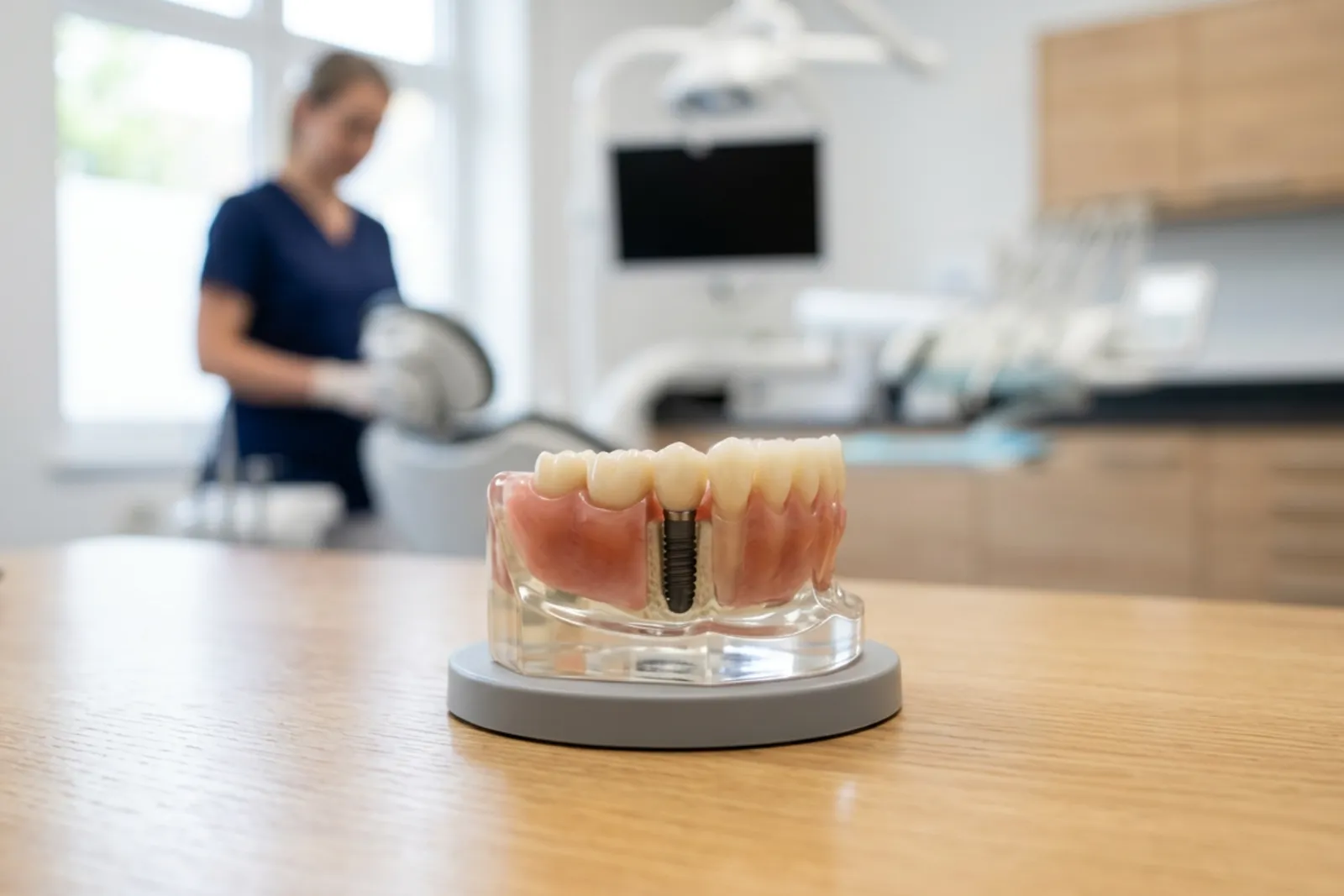
A dental implant is a screw-shaped post, usually made of titanium, that is placed in the jawbone. It acts as an artificial tooth root. The visible replacement tooth is a separate part of the treatment.
For a single missing tooth, the completed restoration generally has three components: the implant post, an abutment that connects to the post, and a crown that looks and functions like a tooth. These components may appear as separate charges or be grouped together in a treatment package.
When several teeth are missing, an implant-supported bridge may replace them without requiring an implant for every missing tooth. For an upper or lower jaw with no remaining teeth, a full-arch restoration may be an option.
Dental implants can improve chewing, restore appearance, and help support a stable bite. They may also help limit bone loss around the implant site. Unlike a traditional tooth-supported bridge, an implant restoration may avoid the need to reshape neighboring healthy teeth.
These benefits depend on suitable planning, healing, and ongoing care. Implants are not appropriate for everyone, and no single configuration suits every mouth.
Why a Starting Price May Not Be the Full Price
An advertised starting price is best treated as an invitation to ask questions, not as a confirmed total.
For example, one quote might include the implant post and its surgical placement. Another might include the post, abutment, and crown. Even if both are labeled “single dental implant,” they describe different amounts of treatment.
A complete estimate should explain the charges for the planned course of care. That may include consultations, diagnostic records, surgery, restorative work, and follow-up visits. Some services may be bundled, while others are billed separately.
The most useful question is: “Does this amount cover a completed replacement tooth, or only part of the process?”
It is also worth asking whether the estimate is provisional. Before an examination and appropriate imaging, a dental team may not know whether a tooth needs removal, whether bone support is adequate, or whether gum treatment is necessary.
A revised estimate after assessment does not automatically mean the original information was misleading. Clinical findings can change the plan. Still, you should understand what remains uncertain and receive an explanation of proposed changes before additional treatment proceeds.
The Main Components of an Implant Estimate
Assessment and imaging
The initial assessment usually includes a review of your medical and dental history, an examination, and appropriate diagnostic imaging. The clinician considers the condition of your gums, remaining teeth, bite, and jawbone.
CBCT imaging creates a three-dimensional view that can help assess bone dimensions and the location of structures such as nerves and sinuses. Your clinician should explain which imaging is needed and why.
Ask whether consultation and imaging fees are included, charged separately, or credited toward treatment. Digital scans or impressions used to plan and create the restoration may also have their own charges.
Implant placement and anesthesia
The surgical portion includes placing the implant in the jawbone. Its cost can vary with the number of implants, the complexity of the site, and any other surgical care required.
Local anesthesia is commonly used to numb the area. If sedation is being considered, ask whether it is appropriate for your health and circumstances, what monitoring is involved, and whether it carries a separate fee. Sedation is not automatically included in implant treatment.
The abutment and final restoration
The abutment connects the implant to the crown, bridge, or denture. Because it is less visible than the final tooth, it is easy to overlook when comparing prices.
The restoration itself also affects cost. A single crown is different from a multi-tooth bridge or a full-arch prosthesis. Materials, laboratory work, and the complexity of achieving a comfortable bite all influence the estimate.
Ask whether the quoted amount includes the definitive restoration, any temporary teeth, and the adjustments expected during fitting. A temporary restoration and a final restoration are not interchangeable items.
When Preparatory Treatment Adds to the Cost
An implant needs adequate support and a reasonably healthy oral environment. Sometimes the first step is addressing a problem that would otherwise make implant treatment less predictable.
A damaged tooth may need extraction. Active gum disease may require periodontal care before placement. If there is insufficient bone, bone grafting may be recommended. In some upper back-tooth sites, a sinus-related procedure may be needed to create suitable space and support.
Gum grafting may also be considered when the surrounding soft tissue needs attention. None of these procedures is automatically necessary for every patient.
Preparation can affect both cost and timing. Some procedures can be completed at the same appointment as implant placement; others require a separate healing period.
Ask for each recommended procedure to be listed separately, with its purpose, fee, and expected effect on the schedule. It is reasonable to ask what alternatives exist and how proceeding without the recommended preparation would affect the treatment’s suitability or risks.
How Treatment Stages Affect Your Budget
Implant treatment usually takes place over several appointments. Understanding the stages makes it easier to see when charges arise and what each payment covers.
Initial consultation and planning
The dental team reviews your health history, examines your mouth, and gathers the records needed for planning. Health conditions, medications, smoking, and previous dental treatment can affect clinical decisions.
This is the time to discuss your priorities, including comfort, appearance, chewing, and budget. Ask for a written plan specific to your assessment rather than relying only on a general price range.
Implant placement and healing
During placement, the area is numbed and the implant is inserted into the jawbone. The surgical technique depends on the treatment plan.
A healing period allows the bone to form a stable connection with the implant. The timing varies according to the site, bone condition, and whether grafting was needed.
Some patients qualify for a temporary restoration soon after placement, but that is not appropriate in every case. Ask what you will use during healing and whether its cost is included.
Abutment connection and restorative records
Once the implant is ready for restoration, the connecting components are placed or adjusted. Some treatment plans require another minor procedure to access the implant.
Impressions or digital scans provide the information needed to make the replacement tooth or teeth. Depending on the approach, some steps may be combined or completed in a different order.
Final fitting and follow-up
The final crown, bridge, or denture is fitted, and the clinician checks the bite, appearance, and cleaning access. Trial fittings may be necessary, particularly for larger restorations.
Confirm which fitting appointments and adjustments are covered. Also ask when routine maintenance begins and how it will be charged.
Comparing Options for Several Missing Teeth
The number of missing teeth does not necessarily equal the number of implants required. That distinction can make a substantial difference to the treatment plan.
An implant-supported bridge uses strategically placed implants to support several replacement teeth. Its suitability depends on factors such as the span being restored, bone support, bite forces, and cleaning access.
Full-arch approaches, including All-on-4 and related designs, replace an entire upper or lower set of teeth. The name alone does not tell you everything included in the price. You still need to know the number of implants, whether one or both jaws are being treated, and what temporary and final restorations are planned.
A fixed full-arch restoration is secured to the implants and is not removed by the patient. An implant-retained overdenture can be removed by the patient for cleaning. Their construction, maintenance, and costs differ.
The lower-cost option is not automatically the wrong choice, and the more expensive option is not automatically better for you. Daily cleaning, comfort, repair needs, and your ability to manage the restoration matter alongside price.
Insurance, Payment Timing, and Financing
Insurance coverage for dental implants varies by policy. A plan may cover certain related services while excluding others, or it may apply annual limits and other restrictions.
Ask the dental office for an itemized treatment plan with the procedure codes or descriptions your insurer needs. Then confirm coverage directly with the insurer. Ask whether a pretreatment estimate or preauthorization is available, and remember that it may not guarantee final payment.
Find out how deductibles, coverage limits, exclusions, and eligibility rules affect your expected share. If treatment crosses a benefit year, ask how claims are handled rather than assuming that timing will increase coverage.
Payment timing deserves its own conversation. Fees may be due at different stages, and laboratory work may involve payment before the final restoration is delivered.
If financing is available, review the interest rate, fees, payment schedule, and total repayment amount. A manageable monthly payment can be helpful, but it does not tell you the full cost of borrowing. Staged payments and third-party financing are different arrangements.
Include Maintenance in the Long-Term Picture
Implants cannot develop tooth decay, but the tissues around them can become inflamed or diseased. Daily cleaning and professional monitoring remain necessary.
Crowns, bridges, and denture components can also wear, loosen, chip, or need replacement. No restoration should be assumed to last a lifetime without maintenance.
Before treatment, ask how you will clean around the proposed restoration and what professional visits are recommended. Some designs require special cleaning aids or periodic replacement of attachment components. A night guard may be recommended if grinding places extra stress on the restoration.
These ongoing expenses may not belong in the initial surgical estimate, but they belong in your overall budget.
A Short Checklist Before You Commit
You should leave the planning conversation knowing what you are agreeing to. Use these questions to close any gaps:
Does the total include the implant post, abutment, and final crown, bridge, or denture?
Are imaging, anesthesia, temporary teeth, fitting appointments, and planned follow-up included?
Is preparatory treatment needed, and what will it add to the cost and timeline?
Is this estimate based on my examination and imaging, and what could change it?
What has my insurer confirmed, and when will my payments be due?
What maintenance, repairs, or replacement costs should I plan for?
The most useful estimate is clear enough that you can explain it in your own words. Take time to compare equivalent treatment plans, ask about uncertain charges, and understand the alternatives. A decision about dental implants should feel informed, with the full course of care in view.